Jump to  
Private vs. Public Water:  A Tale of Felton, CA

Private vs. Public Water: A Tale of Felton, CA

Posted on Jul 27, 2010 by Jennifer Lance.

0

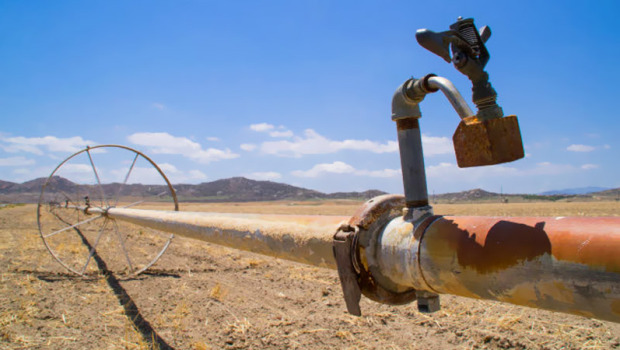
Do you know who owns your water?  Many communities have moved from public water works to privatization of this important utility.  Corporations raise rates, and citizens are left with no local control.  In many towns, grassroots movements have successfully fought corporate water acquisition.  Felton, California is a model of such citizen action.

[...continues...]

  • Sphinn
  • del.icio.us
  • Facebook
  • Mixx
  • Google Bookmarks
  • email
  • LinkedIn
  • Live
  • MySpace
  • Ping.fm
  • Technorati
  • Tipd
  • Digg
  • Reddit
  • StumbleUpon
  • Yahoo! Buzz
  • Print
  • Twitter
  • FriendFeed
  • PDF
  • RSS

Continue Reading

Increased CO2 in World’s Oceans Causes Fish to be Attracted to Predators

Increased CO2 in World’s Oceans Causes Fish to be Attracted to Predators

Posted on Jul 23, 2010 by Jennifer Lance.

0

Human activity is not only causing increased carbon dioxide (CO2) emissions in our atmosphere, but our oceans are suffering as well.  CO2 absorption causes the water to become more acidic, which in turn alters marine life’s natural instincts to avoid predation.  Researchers fear the results will have “far-reaching consequences for the sustainability of fish populations”. [...continues...]

  • Sphinn
  • del.icio.us
  • Facebook
  • Mixx
  • Google Bookmarks
  • email
  • LinkedIn
  • Live
  • MySpace
  • Ping.fm
  • Technorati
  • Tipd
  • Digg
  • Reddit
  • StumbleUpon
  • Yahoo! Buzz
  • Print
  • Twitter
  • FriendFeed
  • PDF
  • RSS

Continue Reading

Report: Toxins Found in Whales Bad News for Humans

Report: Toxins Found in Whales Bad News for Humans

Posted on Jul 21, 2010 by Zachary Shahan.

0

Bad news and bad news for whales these days — endangered baby whales are dying from the BP oil spill and the toxic dispersants used to “clean it up” and the International Whaling Committee has been discussing whether or not to legalize whaling of endangered whale species.

Now, a new study finds that sperm whales in even the most remote areas of the Earth’s oceans contain extremely high levels of toxins and heavy metals.

Of course, this is not only bad news for the whales, but also for humans [...continues...]

  • Sphinn
  • del.icio.us
  • Facebook
  • Mixx
  • Google Bookmarks
  • email
  • LinkedIn
  • Live
  • MySpace
  • Ping.fm
  • Technorati
  • Tipd
  • Digg
  • Reddit
  • StumbleUpon
  • Yahoo! Buzz
  • Print
  • Twitter
  • FriendFeed
  • PDF
  • RSS

Continue Reading