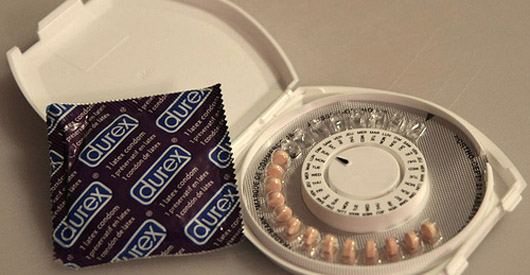
An estimated 80 million women worldwide take oral contraceptives (aka “the Pill“) to “inhibit ovulation and thus prevent pregnancy”. First available to the public in the 1960s, the Pill has been pronounced as “the most significant medical advance of the 20th century”. Although the Pill revolutionized women’s health, traces of the contraceptive are ending up in treated wastewater and harming fish.

Published in the journal Environmental Science and Technology, this new study found traces of the hormone levonorgestrel in treated wastewater of three Swedish cities: Stockholm, Umeå and Gothenburg. In fact, fish had higher levels of the hormone in their blood than women who take the Pill orally. Medical News Today reports:
The study shows that levonorgestrel – which is found in many contraceptive pills, including the morning-after pill – can impact on the environment and constitutes a risk factor for the ability of fish to reproduce. Levonogestrel is designed to mimic the female sex hormone progesterone and is produced synthetically…Elevated levels of this hormone can lead to infertility in fish.
Previous studies have found pharmaceutical drug residues in tap water, but the focus has largely been on how it affects human health. Obviously, aquatic life is also affected. This new study reveals it is not only the synthetic oestrogen, as previously known, but synthetic progesterone-like hormones found in the Pill that pose a threat to fish reproduction.
The Pill used to contain higher levels hormones, but due to health concerns, these amounts were lowered in the 1980s. The BBC explains:
Much investigation has been done into the more serious side effects area and, according to the US Food and Drug Administration, more studies have been done on the potential side effects of the pill than for any other medicine.
Some of the concerns were linked to the hormone levels in the pill.
These have now been lowered.
In the early years, the pill contained around 50 micrograms of oestrogen and it now contains around 30. Progestin levels have been reduced to a tenth of their original level.
Despite reduced levels of hormones in the Pill, traces are still showing up in treated wastewater. Researchers caution that although this is a concern for fish, human health is a priority. Joakim Larsson of the Sahlgrenska Academy cautions, “If we know how our medicines affect the environment, we will be in a better position to choose environmentally friendly alternatives, though we must always put the health of patients first.”
You must be logged in to post a comment.