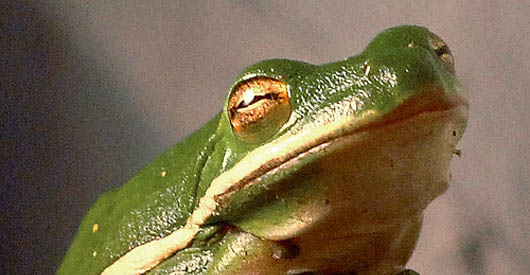
Atrazine is a common herbicide used in agriculture around the world for 50 years. The National Resource Defense Council (NRDC) found atrazine present in “75 percent of stream water and about 40 percent of all groundwater samples,” as well as 90 percent of tap water sampled. Recent research conducted at the University of California at Berkeley has found atrazine actually “castrates” frogs at amounts similar to those found in tap water and considered safe by the Environmental Protection Agency (EPA).

Research conducted in 2002 found that “Native male leopard frogs throughout the nation’s Corn Belt are being feminized by an herbicide, atrazine, used extensively to kill weeds on the country’s leading export crops, corn and soybeans.” Specifically, some male frogs changed into female frogs at the tadpole stage or developed eggs in their testes. The latest research just published in the Proceedings of the National Academy of Sciences, finds frogs can actually be castrated by this common weed killer. USA Today explains:
An herbicide that contaminates the tap water consumed by millions of Americans has been found to produce gender-bending effects in male frogs, “chemically castrating” some and turning others into females, a study shows.
Frogs in the experiment were exposed to amounts of the weedkiller atrazine that are comparable to the levels allowed in drinking water by the Environmental Protection Agency, says lead researcher Tyrone Hayes of the University of California-Berkeley…
The experiment can’t tell scientists whether atrazine affects humans in a similar way, Hayes says. But it does raise new questions about the safety of atrazine, which other studies have linked to human birth defects, low birth weight, prematurity and low sperm count.
Manufacturer Sygenta insists atrazine is safe, “Levels of atrazine in U.S. waters are well within the federal lifetime drinking water standard of 3 parts-per-billion — a level containing a 1,000-fold safety buffer.” Unfortunately, these federal limits may not be restrictive enough, at least for amphibians. The company also claims Hayes’ research is “insufficient to demonstrate that atrazine causes such effects” and thinks chytridiomycosis is more to blame for changes in amphibians throughout the world.
The good news for humans is that filters easily remove atrazine from tap water, but that doesn’t help out the frogs. The European Union has banned atrazine, and the Obama administration announced in October 2009 it would “take steps to re-evaluate the chemical,” according to the NRDC. Unfortunately the federal review will take a year to complete.
You must be logged in to post a comment.