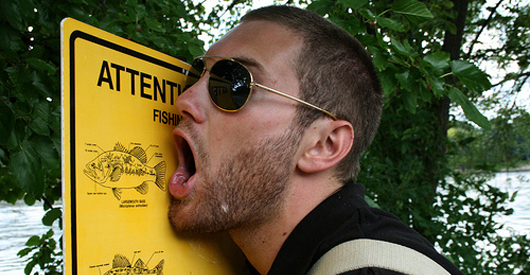
Am I a girl? Am I a boy? That’s what bass are asking themselves in US rivers across the country. According to a new research study released by the US Geological Society on September 14, 2009, widespread “intersex” bass are found in eight of the nine rivers.
Scientists found intersex fish in about a third of all sites examined from the Apalachicola, Colorado, Columbia, Mobile, Mississippi, Pee Dee, Rio Grande, Savannah, and Yukon River basins. The Yukon River basin was the only one where researchers did not find at least one intersex fish.

Intersex characteristics are predominantly found in male fish with “immature female egg cells in their testes”; however, female fish were also found with male characteristics. Large mouth and small mouth bath show the greatest number of incidences of intersexuality. Only fish in the Yukon River were immune.
According to E & E News:
“We did not expect to find it as prevalent as what we did,” said Jo Ellen Hinck, the study’s author. “To see intersex fish 70 to 90 percent at some of these sites is surprising, I think.”
Male intersex fish carry immature female egg cells in their testes, and occasionally, female fish will also show male characteristics. Healthy bass do not normally show these hermaphroditic characteristics.
The cause of the gender confusion is endocrine disruptors found in US waterways; however, these chemicals often do not show up in water tests. The USGS reports:
Such compounds are chemical stressors that have the ability to affect the endocrine system and include pesticides, PCBs, heavy metals, household compounds such as laundry detergent and shampoo, and many pharmaceuticals. Yet other study sites with high occurrence of intersex were on rivers with dense human populations or industrial and agricultural activities, which are more generally associated with endocrine-active compounds.
Estrogen exposure has also been shown to put fish at a greater risk for early death, linking perhaps intersex characteristics with fish kills. Researchers don’t know why bass are more prone to the intersex condition compared to other fish species.
If endocrine disruptors in US rivers are causing these problems in fish, imagine what it is doing to human health.
You must be logged in to post a comment.