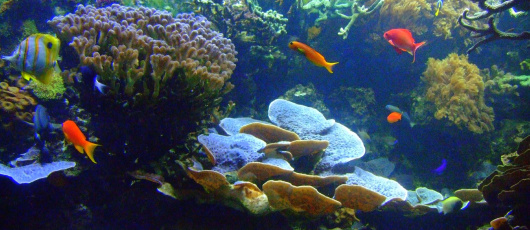
By 2050, our planet’s oceans could be too acidic for corals to reproduce or rebuild, and the $16 trillion ocean-based economy is in danger of being wiped out if things continue as they are. The high levels of CO2 emitted into the atmosphere from human activities have a dramatic impact on many of our oceans’ life forms, and the ramifications of continuing to release CO2 at current amounts will be severe, say scientists.

Ocean acidification is an extremely serious issue right now, and one not often discussed outside of scientific peer groups working in the fields of climate change or ocean-related disciplines. About one fourth of the CO2 released every year into the atmosphere gets absorbed by the ocean, lowering the pH of the seawater and decreasing the rate at which corals can grow. Coral reefs are considered the ‘rain forests’ of the ocean, sheltering other organisms within their ecosystems and also acting as a bellwether to indicate change in the oceans.
The CO2 absorbed by the ocean slows the rate of climate change effects due to excess atmospheric CO2, but is causing unforeseen consequences under the waves. Ocean acidity has increased about 30% over the last hundred years, and some say that the rate of acidification is increasing, not leveling off.
Other marine animals that have shells are also affected by the higher acidity in the ocean, as the aragonite (a form of calcium carbonate) used to build shells and coral structure is not available at levels needed by the organisms. The CO2 forms carbonic acid when absorbed into the ocean, and with a lower pH comes the possibility of dissolution of structures (shells, corals) constructed from calcium carbonate.
Possible cascade effects from ocean acidification are not known, and a domino-like chain of events could cause ripple effects on other ecosystems due to the loss of coral reefs around the world. A number of other organisms in the ocean dependent on coral reefs could be radically affected by ocean acidification, leading to massive change in the ocean.
Even if we halt all human-cause CO2 emissions today, thousands of years may be necessary to return oceans to pre-industrial levels, so many concerned scientists are calling for a moratorium on CO2 emissions from burning fossil fuels and an immediate change to a carbon-neutral energy infrastructure.
You must be logged in to post a comment.